
Examining Pioglitazone-Induced Fracture Risk Cardiovascular Benefits Versus Skeletal Adverse Effects
The Endocrinology and Metabolism Research Institute's Journal Club session was held on July 20, 2026, at Iran University of Medical Sciences. In this session, Dr. Sara Bazgiri, a fellow in Endocrinology and Metabolism, reviewed an article from Frontiers in Pharmacology demonstrating that pioglitazone, despite its significant benefits in reducing stroke and cardiovascular events, is associated with a 21% increased risk of fractures, particularly in women and stroke survivors. These findings emphasize the necessity of an individualized therapeutic approach when prescribing this medication.
According to the Public Relations Office of the Endocrinology and Metabolism Research Institute, the Journal Club session of this research institute was held on Monday, July 19, 2026, with the attendance of faculty members, researchers, students, and endocrinology fellows in the institute's conference hall. In this scientific session, Dr. Sara Bazgiri, a fellow in Endocrinology and Metabolism, presented and reviewed an article from the prestigious journal Frontiers in Pharmacology titled "Clinical implications of fracture severity risk with pioglitazone: a systematic review and meta-analysis of clinical randomized trials," which was published on March 6, 2025.
At the beginning of her presentation, Dr. Bazgiri referred to the importance of pioglitazone in treating diabetic patients and individuals with insulin resistance, stating: Pioglitazone belongs to the thiazolidinedione (TZD) class of drugs, which, by activating PPAR-γ receptors, increases insulin sensitivity and, through improving glucose and lipid metabolism, plays an effective role in glycemic control. One of the most important benefits of this drug is its cardiovascular effects. The landmark IRIS trial demonstrated that pioglitazone significantly reduces the risk of recurrent stroke and myocardial infarction in insulin-resistant patients with a history of stroke. Additionally, this drug possesses anti-inflammatory properties and improves lipid profiles, further enhancing its cardioprotective effects.
She added: Despite these remarkable benefits, pioglitazone is associated with adverse effects such as weight gain, peripheral edema, and particularly increased risk of bone fractures. This complication can partially overshadow the drug's cardiovascular benefits, especially in vulnerable groups such as postmenopausal women, the elderly, and individuals with a history of stroke who are already at high risk of falls. Accordingly, the research team conducted a comprehensive systematic review and meta-analysis to precisely quantify this risk and identify high-risk subgroups.
The endocrinology fellow elaborated on the study methodology: The researchers searched reputable databases including Cochrane, EMBASE, MEDLINE, and ClinicalTrials.gov for all randomized controlled trials up to March 2024 that compared pioglitazone with placebo or other antihyperglycemic agents and reported fracture outcomes. From 860 initially identified trials, after applying inclusion and exclusion criteria, 78 studies were found eligible, of which 36 had high quality (low risk of bias), 8 had unclear risk of bias, and 34 had high risk of bias. After excluding studies with high risk of bias, the final meta-analysis was performed on 44 trials comprising over 86,000 participants.
Dr. Bazgiri highlighted the main findings of this meta-analysis: Results showed that pioglitazone use compared to placebo was associated with a 21% increase in overall fracture risk (Risk Ratio 1.21; 95% Confidence Interval 1.01 to 1.45; P=0.04). This increased risk was observed for both non-serious fractures (requiring outpatient care) with a risk ratio of 1.25 and serious fractures (requiring hospitalization, surgery, or physiotherapy) with a risk ratio of 1.48. Notably, the risk of low-energy fractures, often resulting from falls from standing height or lower, was significantly higher (Risk Ratio 1.49; P=0.0004), which is particularly alarming for stroke survivors who already struggle with balance problems and muscle weakness.
She continued by stating that the study specifically examined various subgroups: In stroke survivors, pioglitazone use was associated with a 41% increased fracture risk (Risk Ratio 1.41; P=0.008), a finding that supports the IRIS trial results. Regarding gender, women were significantly more susceptible, with fracture risk increasing by 56% (Risk Ratio 1.56; P=0.0008), while the increase in men was 10% and not statistically significant. This gender difference is likely related to bone density loss associated with reduced estrogen levels during menopause.
Dr. Bazgiri pointed out fracture locations: The most common fracture sites were the lower extremities with an 85% increased risk (Risk Ratio 1.85; P=0.0002), followed by the spine with a 113% increased risk (Risk Ratio 2.13; P=0.004). Regarding the drug's effect on bone mineral density, three trials that measured this parameter showed significant reductions in lumbar spine and hip bone density, although this reduction was less than the average annual bone loss in postmenopausal women, suggesting that long-term cumulative effects may be of greater clinical significance.
The endocrinology fellow then compared pioglitazone with other antihyperglycemic agents: In 13 trials comparing pioglitazone with other glucose-lowering drugs (such as metformin, sulfonylureas, and GLP-1 agonists), no significant difference in fracture risk was observed (Risk Ratio 1.08; P=0.70). This finding indicates that fracture risk is primarily related to the thiazolidinedione class itself, and other diabetes medications do not carry such risk. However, comparison with rosiglitazone (from the same class) showed that rosiglitazone was associated with a 42% increased fracture risk, which is even higher than pioglitazone.
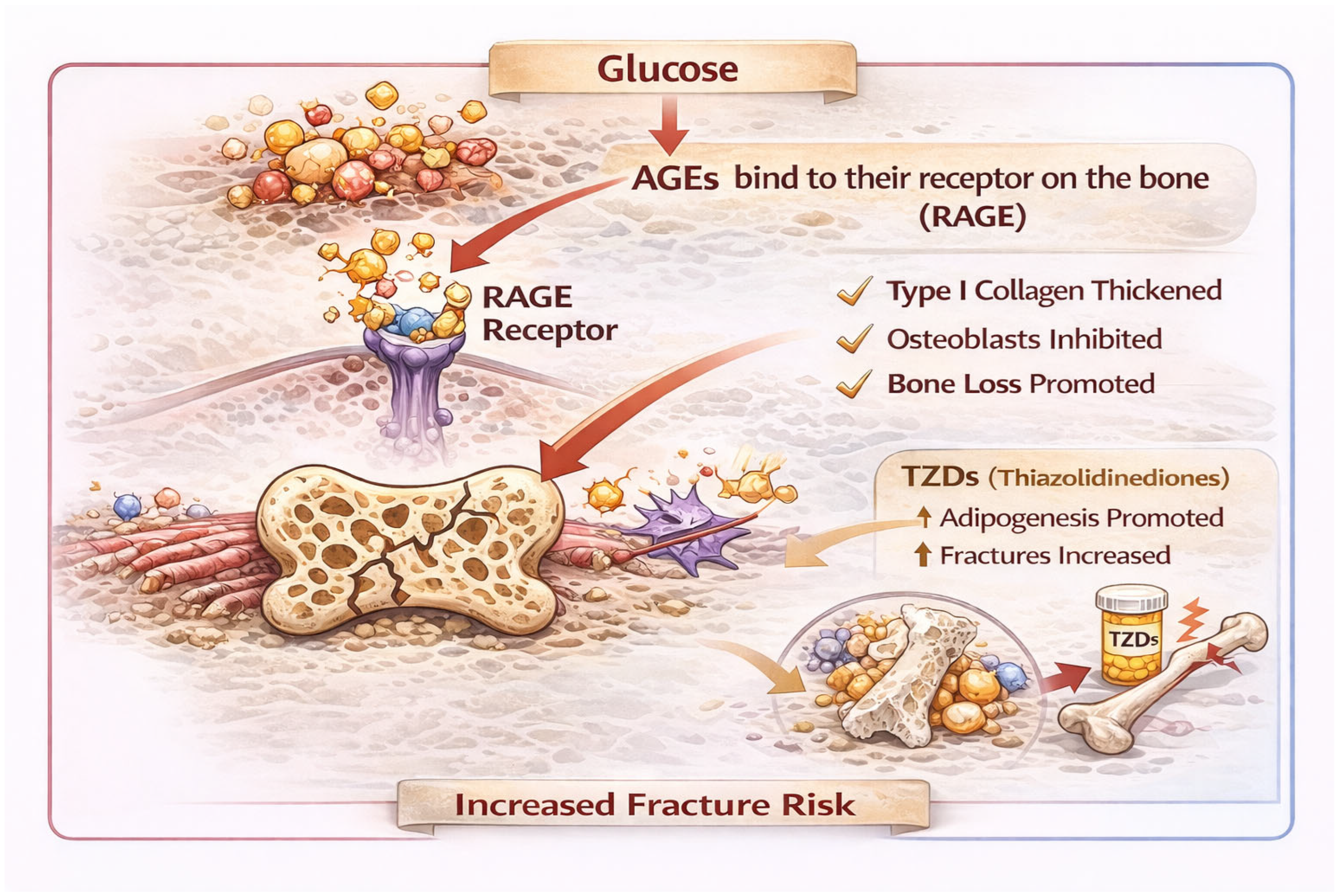
Regarding potential mechanisms, Dr. Bazgiri stated: Experimental studies have shown that thiazolidinediones, by affecting mesenchymal stem cell differentiation, promote differentiation toward adipocytes and reduce differentiation toward osteoblasts (bone-forming cells). This dual mechanism, along with increased bone resorption by osteoclasts, leads to reduced bone mass and increased fracture risk. Additionally, these drugs may indirectly increase fracture risk by affecting calcium and vitamin D homeostasis or by increasing fall risk through hypoglycemia. However, the researchers emphasize that part of the increased fracture risk in stroke patients may be attributed to stroke-induced neurological disabilities (such as muscle weakness, balance problems, and visual disturbances) rather than solely to the direct effect of the drug.
In another part of her presentation, Dr. Bazgiri addressed the quality of available evidence: According to GRADE assessment, the quality of evidence for increased fracture risk in women and stroke survivors is at a moderate to high level, but for some subgroups such as specific fracture locations or bone density changes, evidence remains limited and requires further studies. Additionally, one of the important limitations of this study is the heterogeneity in fracture definitions and incomplete reporting of some key variables such as fall history, vitamin D status, osteoporosis history, and concurrent use of bone-affecting medications in the primary trials.
Dr. Bazgiri concluded by summarizing the findings and presenting clinical implications: Given that the debilitating consequences of stroke are often considered worse than death, preventing recurrent stroke with pioglitazone is of great importance. However, this benefit must be weighed against the increased fracture risk, which is particularly significant in women and stroke survivors. Based on the data from this study, treating 100 patients with pioglitazone for 5 years may result in one additional non-serious fracture and up to three serious fractures. Therefore, an individualized therapeutic approach considering underlying risk factors such as age, gender, fracture history, bone mineral density, vitamin D status, and fall risk is essential for each patient.
She added: In patients with high fracture risk, alternative treatment options can be considered, or if pioglitazone is deemed necessary, it can be combined with bone-protective agents such as bisphosphonates or calcium and vitamin D supplements. Additionally, combining pioglitazone with metformin, which some studies have shown to have bone-protective effects, could be an effective strategy. Finally, conducting prospective studies with long-term follow-up and standardized fracture reporting, as well as comparative research with newer diabetes medications, is essential to clarify the risk-benefit ratio of this valuable drug and can contribute to developing more precise clinical guidelines.
At the end of the session, attendees engaged in discussion and exchange of views on various aspects of this study, and questions were raised about the generalizability of results to the Iranian population, drug interactions, and practical strategies to reduce fracture risk in patients treated with pioglitazone, which were answered with well-documented responses by the presenter.









.jpg)


comment